
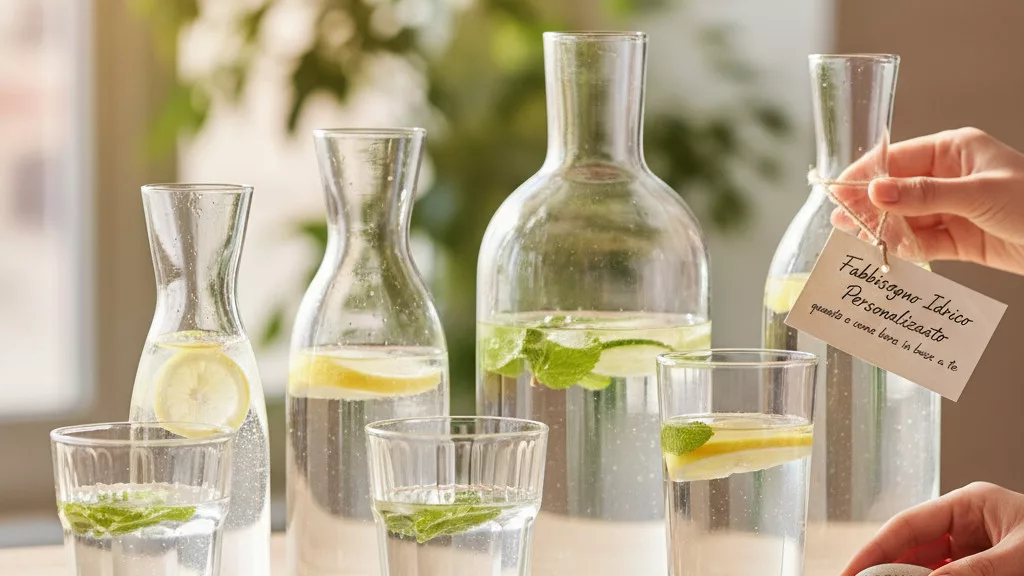
Introduction to Hydration
Proper hydration is a crucial factor in keeping our body healthy. But how much water should we actually drink every day? The answer is not universal, as it varies from person to person, influenced by various factors such as age, level of physical activity, and climatic conditions.
Good hydration is essential not only to prevent dehydration but also to avoid excessive water intake, which can be equally harmful. In this article, we will explore how to calculate your personalized water needs so that you drink the right amount of water every day.
Factors Influencing Water Needs
To determine how much water is necessary, it is essential to consider various factors. Let's analyze the most significant ones:
- Age: Children and the elderly have different water needs. Infants need about 100-150 ml of water per kilogram of body weight, while the elderly require special attention, as the perception of thirst decreases with age.
- Physical Activity: Those who exercise or have an active lifestyle need to increase their water intake. It is advisable to drink at least 500 ml of water before intense physical activity and continue to hydrate during and after exercise.
- Climate and Temperature: In hot or humid environments, water needs increase significantly. During heatwaves, we suggest increasing your water intake by at least 1-2 liters per day.
Calculating Water Needs
One of the simplest methods to calculate your water needs is through the body weight formula. A common estimate suggests drinking about 30-35 ml of water per kilogram of body weight. For example, if your weight is 70 kg, you would need about 2.1-2.5 liters of water per day.
Alternatively, there is a more sophisticated method that also considers physical activity and climate. You can start from your base need and add 350-700 ml for every hour of intense physical activity and at least 1-1.5 liters if you are in a hot climate.
Try to keep track for a couple of weeks of how much you drink and how you feel. This will help you understand if you are meeting your water needs.
Signs of Dehydration
It is essential to recognize the signs of dehydration to intervene promptly. Some common symptoms include:
- Intense Thirst: the main signal that the body requires more fluids.
- Dark Urine: if the urine is dark yellow, it may be a sign of dehydration.
- Dry Skin: dehydrated skin may appear less elastic.
If you notice one or more of these signs, increasing your water intake is urgent. We recommend drinking at least 500 ml of water immediately and continuing to monitor your hydration status.
Risks of Excessive Hydration
Drinking too much water may seem harmless, but it can lead to a condition known as hyperhydration. This occurs when the body accumulates too much water, diluting sodium levels in the blood, a condition called hyponatremia. Symptoms include:
- Nausea and vomiting
- Headache
- Mental confusion
To avoid excessive hydration, try to drink water regularly, without forcing yourself to drink large amounts at once.
Alternative Hydration Sources
In addition to water, there are various foods and beverages that contribute to hydration. Some examples include:
- Fruits: cucumbers, watermelon, and oranges are high in water.
- Vegetables: lettuce, tomatoes, and spinach offer excellent hydration.
- Beverages: unsweetened tea and herbal infusions can also help you maintain a good level of hydration.
Incorporating these foods into your diet can help you meet your water needs without having to drink only water.
Strategies to Stay Hydrated
To ensure you drink the right amount of water, you can adopt some simple strategies:
- Set Reminders: use your smartphone to set alerts every hour, reminding you to drink a glass of water.
- Use a Water Bottle: always carry a refillable water bottle to encourage the habit of drinking regularly.
- Drink Before Meals: try to drink a glass of water 30 minutes before meals to improve digestion.
These small adjustments can make a big difference in maintaining proper daily hydration.
Conclusions
Managing your hydration requires awareness and attention. Factors such as age, physical activity, and climate are crucial in calculating your water needs. Remember to listen to your body, recognize the signs of dehydration and excessive hydration. Start today by monitoring how much you drink, and try to implement some of the strategies we discussed. Your health and well-being depend on proper hydration.
Try keeping a water diary for the next two weeks and note how your energy levels and overall health change.



Comments
comments.cta_title
comments.cta_text
comments.login_cta
comments.empty_title
comments.empty_text